Payment Successful.
You've taken a real first step toward getting your nights back — with a plan built to work alongside your doctor's care, not replace it.
Most prostate products on the shelf overpromise and quietly underdeliver. This guide does the opposite. It's built around the lifestyle and behavioural changes that urologists recommend as the first-line step for an enlarged prostate — the everyday habits that help many men ease urgency and cut down on nighttime trips. No miracle cure. No secret. Just the practical routine, laid out so you can actually follow it.
A simple daily routine. Alongside your medication. Tracked over the coming weeks — so you can see for yourself what's working. 🌙
🌙 The steps in this guide — shifting your fluids earlier, retraining your bladder, strengthening the pelvic floor, and tidying up the evening routine — are the same first-line changes doctors suggest before and alongside medication. They're small and consistent rather than dramatic. Give them a few honest weeks and track your symptoms.
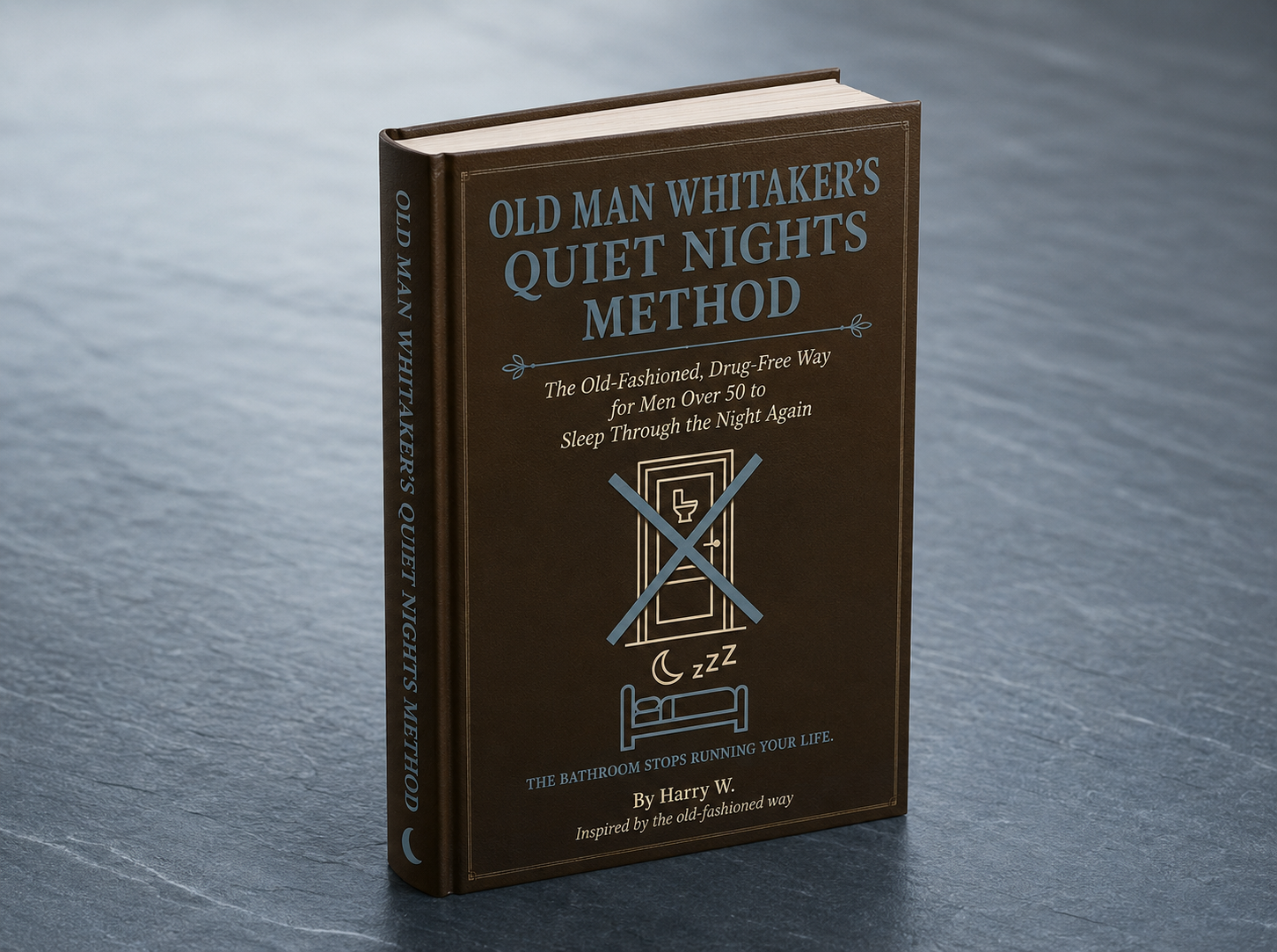
Your Quiet Nights Package Is Ready
Click below to download the main guide and both bonuses instantly.
Download Old Man Whitaker's Guides📦 Here's What You Got
The complete Quiet Nights Method: what an enlarged prostate actually is (and why it isn't cancer), the warning signs that mean see a doctor now, a symptom self-assessment to set your baseline, fluid timing, bladder irritants, the bladder-retraining technique, a pelvic-floor routine, weight and movement, an honest look at what the supplement research really shows, and a 30-day starter plan. Built to work alongside your current medication
How to ease daytime urgency and stop planning your day around proximity to a toilet. The bladder-retraining technique for extending the time between trips, plus practical strategies for driving, meetings, church, and dinners
The evening routine for fewer nighttime trips: when to stop drinking fluids, which drinks to move earlier in the day, and how to empty fully before bed
Your First 48 Hours
Download Everything Now
Tap the button above and save all three files to your phone. You'll reference the main guide and both bonuses over the coming weeks.
Read the Quiet Nights Blueprint Tonight (Bonus #2)
Start here. Shifting your last drinks earlier and fully emptying your bladder before bed is the simplest change in the whole plan, and for many men it's the first one that helps. Be realistic: results vary from man to man, and night one rarely changes everything. The point is to start the habit tonight.
Read the Bathroom Confidence Guide (Bonus #1)
Learn the bladder-retraining technique, which gradually extends the gap between trips, plus the practical tools for handling urgency when you're out. These build over time rather than overnight.
Set Your Baseline Today
Before you change anything, fill in the symptom self-assessment in the main guide and write down your score and your nightly trip count. This is the most important step most people skip. In a few weeks you'll re-score, and that's how you'll know what's genuinely working instead of guessing.
Start the Daily Routine
Fluid timing, bladder training, and the pelvic-floor routine (about 15 minutes). Keep taking any medication exactly as your doctor prescribed it — these habits are designed to work alongside your treatment, never instead of it.
Be Patient, and Honest With Yourself
Behavioural changes take time — usually a few weeks, not a few days. Track your symptoms and re-score at day 30. If things aren't improving, or if they're getting worse, that's important information to take to your doctor, not a reason to push harder on your own.
🌙 What to Expect Over the Next Few Weeks
⚠️ Please read this before you start
This guide helps you manage everyday symptoms; it is not a substitute for medical care, and it does not treat or cure an enlarged prostate. Keep taking your prescribed medication and don't change or stop it without speaking to your doctor. If your symptoms get worse, or if you ever can't urinate at all, see blood in your urine, or have fever or pelvic pain, stop and seek medical attention — some prostate problems need treatment that lifestyle changes can't provide.
⚡ One Thing You Can Do Tonight
Open the Quiet Nights Blueprint (Bonus #2) and look at the section on evening fluids.
Think back to what you drank after 7pm last night — tea, coffee, alcohol, or a large glass of water close to bed. Caffeine and alcohol are bladder irritants, and a big drink right before sleep simply gives your bladder more to do overnight. Moving that last drink earlier is a small, free change, and for many men it's where the first improvement comes from.
"The habits that help most aren't dramatic. They're the ones you can actually keep doing — tracked honestly, week after week."
A note from the Whitaker Health team:
You just bought a guide that doesn't promise a miracle, and we did that on purpose. The honest truth about an enlarged prostate is that the changes that help most are the unglamorous ones: when you drink your fluids, how you train your bladder, the muscles you strengthen, and what you do in the hour before bed. They're also exactly what doctors recommend trying first.
None of it replaces your doctor. Keep taking what you've been prescribed, keep your check-ups, and use this guide to get the daily habits right alongside that care. If your symptoms ever worsen, that's a conversation for your urologist.
Start with the evening routine tonight, set your baseline tomorrow, and give it a few honest weeks. Track your trips. Re-score at day 30. Real change here is measured in weeks, not nights — but for a lot of men, those small habits add up to better sleep and a lot less time thinking about the nearest bathroom.
Here's to getting your nights back. 🌙
— The Whitaker Health Team
🌙 30-Day Money-Back Guarantee
Follow the plan alongside your medication for 30 days. If you don't feel it was worth it, email us for a full refund. You keep all three guides regardless.
Need Help?
Questions about the routine, the exercises, or the evening protocol? Just reach out — man to man, completely private and confidential.
Whitaker Health — Old Man Whitaker's Quiet Nights Method © 2026. All Rights Reserved.
Disclaimer: This guide provides general dietary and lifestyle information intended to complement, not replace, professional medical care for benign prostatic hyperplasia (BPH) and prostate wellness. It is not medical advice and does not diagnose, treat, cure, or prevent any disease, including prostate cancer. Do not start, stop, or change any prescribed medication without consulting your doctor. If you experience blood in your urine, an inability to urinate, severe pelvic pain, fever, or rapidly worsening symptoms, seek medical attention immediately. Individual results vary, and many men with prostate symptoms require medical or surgical treatment.